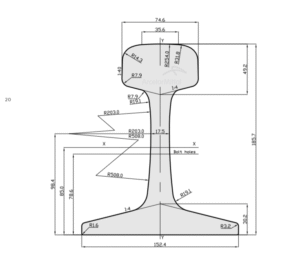
Another aspect is to check if the specific or old rail size you are trying to match or source my no longer be manufactured.
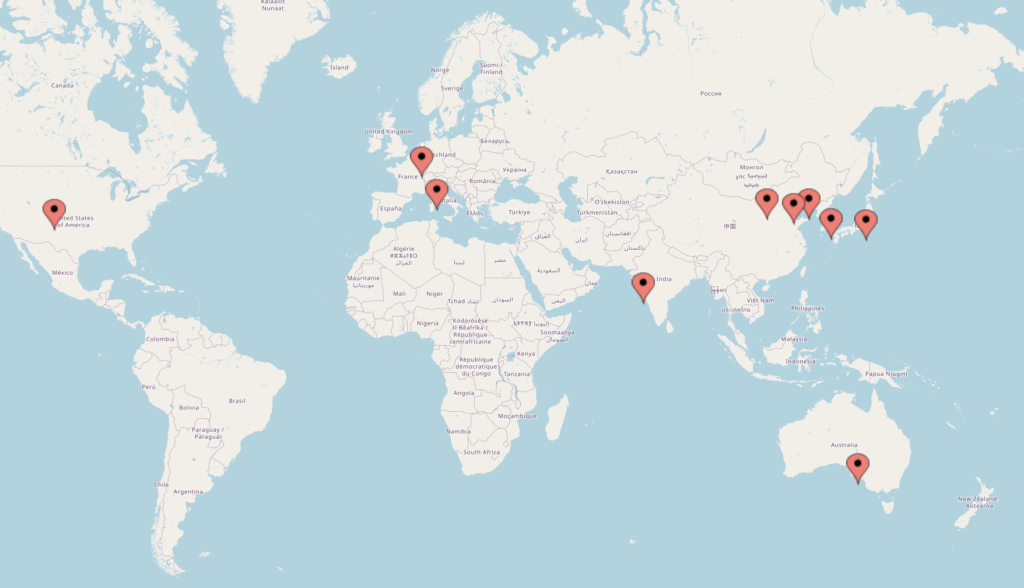
Here’s a breakdown of the world’s major crane rail producers and what each brings to the table.
OneSteel Manufacturing – Whyalla, South Australia
OneSteel Manufacturing is the only domestic manufacturer of steel rail in Australia. Producing both plain carbon and head-hardened rail to Australian Standards (AS 41kg to 68kg profiles). These rails are used extensively in:
- Passenger and Freight rail networks
- Crane rail systems
- Mining and freight infrastructure
- Port and container terminals
Whyalla’s rail is engineered for Australian conditions, offering high fatigue resistance, weldability and compliance with AS standards. If you’re sourcing rail in Australia, Whyalla is the only local option, ensuring sovereign supply chain security and reduced lead times.
Nippon Steel – Japan
Nippon Steel is one of the world’s most advanced rail producers, manufacturing to JIS standards including:
- JIS E 1103: Light carbon steel rail
- JIS E 1120: Head-hardened rail for track and heavy-duty applications
Nippon’s rail is known for its uniform hardness, precision tolerances and high wear resistance. It’s widely used in automated crane systems, container terminals and light rail infrastructure across Asia and beyond.
ArcelorMittal – Europe
ArcelorMittal is a global leader in rail manufacturing, producing to DIN, UIC, and AREMA standards. Its crane rail offerings include:
- DIN 536 profiles (A45 to A150)
- Tram and light rail sections
- Passenger and Freight rail systems
ArcelorMittal’s rail is widely used in Europe, North America and emerging markets.
Chinese Mills
China is home to several major rail producers, including:
Ansteel Group
Ansteel Group Corporation was established after the consolidation and reorganization of Anshan Iron and Steel Group Corporation and PanGang Group Company in May 2010.
- Produces 70 to 120 kg/m rails
- Supplies over 40% of Asia’s crane rail market
- Known for patented heat treatment and high-manganese alloys
Baotou Steel
Baotou Steel Group is a steel company in China and it’s products include hot-rolled sheets, seamless pipes, heavy rails and others.
- Specialises in heavy-duty rails (100–150 kg/m)
HBIS Group, Shougang, Jianlong and others
- Offer a wide range of rail profiles for domestic and export markets
Other Notable Producers
- EVRAZ (UK/Russia)
Supplies modular and dual-standard rails for North America and CIS markets. - POSCO (South Korea)
Known for high-quality steel, including rail for infrastructure and industrial use. - Tata Steel & JSW Steel (India)
Emerging players in rail production for domestic and export markets.
Choosing the Right Rail Source
Manufacturer | Country | Standards | May be best For | Availability in Australia |
OneSteel Manufacturing | Australia | AS | Heavy-duty crane rail | Local supply |
Nippon Steel | Japan | JIS | Light-duty, automated systems | Imported |
ArcelorMittal | Europe | DIN/UIC | Ports, industrial infrastructure | Imported |
Ansteel / Baotou | China | DIN/UIC | High-volume, budget-sensitive | Variable |
Osaka / Mitsubishi | Japan | Specialty | Light Rail | Limited direct supply |
If you’re sourcing crane rail in Australia, OneSteel Manufacturing in Whyalla is the only domestic option. For most applications in Australia, DIN and JIS profiles may be appropriate.