
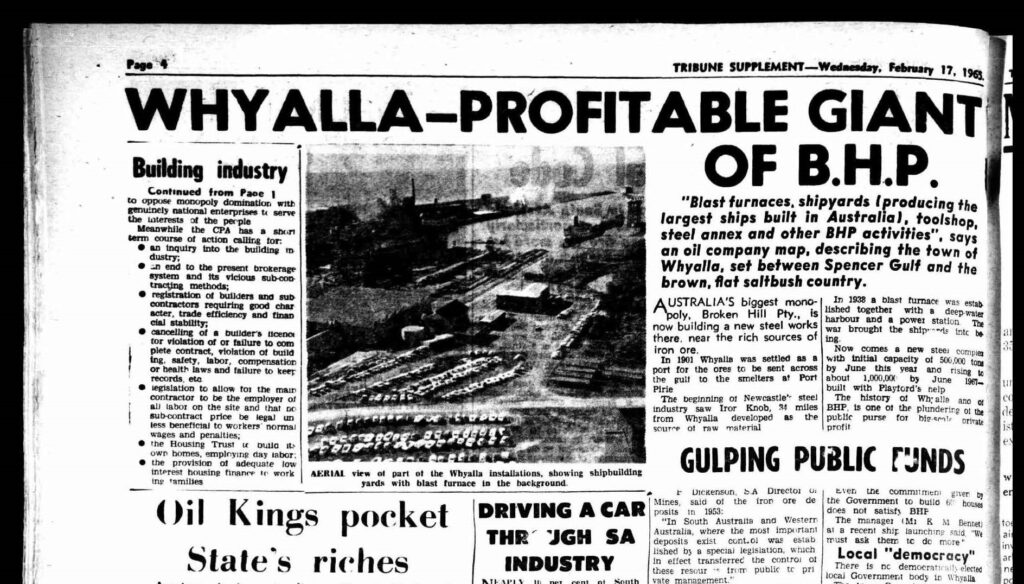
Whyalla’s Origins: Building Australia’s Rail Capability
Whyalla has long stood at the centre of Australia’s rail infrastructure story. From its early days under BHP to its current role as the nation’s only domestic producer of steel rail, Whyalla’s contribution to crane & rail systems is unmatched in scale, quality, and strategic importance.
The foundation of domestic rail production began in 1915 with the BHP Newcastle Steelworks, but it was Whyalla that evolved into the country’s rail manufacturing powerhouse. By the 1970s, BHP’s Whyalla plant had developed head-hardened rail technology to meet the demands of heavy haul mining operations in the Pilbara and coal regions of Queensland and New South Wales.
These rails were engineered to withstand:
- High axle loads
- Intense cyclic fatigue
- Harsh environmental conditions
Whyalla’s head-hardened rail technology was so effective it was licensed internationally, including to American manufacturers, along with proprietary welding techniques.
Whyalla and Crane Rail Systems
Rail systems require precision, durability, and fatigue resistance. Whyalla’s rail products—particularly the Australian Standard 41kg to 68kg profiles—are ideally suited for:
- Overhead crane runways
- Container terminals
- Heavy fabrication yards
- Mining and port infrastructure
The integration of soft mounting systems, resilient pads, and advanced fastening solutions such as the Wilclip fastener (developed by BHP) further enhances performance by reducing vibration, wear, and fretting corrosion.
Sovereign Supply: Whyalla’s Strategic Role
Today, Whyalla is one of only two steelworks remaining in Australia and the only domestic producer of steel rail. It supplies:
- 75% of Australia’s structural steel
- Unique rail profiles manufactured to Australian standards
- Critical infrastructure for mining, freight, passenger and crane rail systems
There is no alternative domestic source for Australian-standard rail. If you are sourcing crane rail in Australia, Whyalla is the only supplier capable of meeting national specifications with local production. This ensures:
- Reduced lead times
- Proven performance in Australian conditions
- Compliance with AS standards and compatibility with DIN and JIS profiles
Why This Matters for Crane Rail Buyers
Whether you’re installing a new crane runway or upgrading an aging system, Whyalla rail offers unmatched reliability, fatigue resistance, and long-term value. Its legacy is embedded in the very tracks that support Australia’s industrial economy.
More Posts

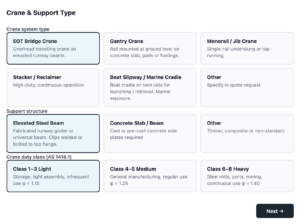
We Built a Free Crane Rail Design Tool. A Worldwide First.
Clip selection, rail profile, lateral loads, clip spacing, fishplates, sole plates, accessories it all stacks up fast. And unless you have someone experienced on the end of the phone, or you happen to have the right manufacturer datasheets in front of you, the process can take longer than it needs to.
That bothered us. So we did something about it.
The ARBED Story Behind Crane Rail (including CR73 Rail)
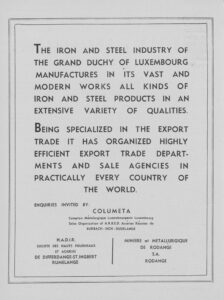
ARBED turns up on legacy drawings, in supplier literature and in the technical specifications behind some of the most widely used crane rail profiles in heavy industry. The company itself no longer exists as a standalone entity, but the catalogue it built lives on inside ArcelorMittal, and the story of how it came to be is one of the more remarkable chapters in twentieth century European industrial history.

The Research That Put Australia on the Heavy Haul Map: 73kg and 86kg Crane Rail
If you’ve come across the 73kg or 86kg crane rail in an Australian port or industrial context, you’re looking at profiles that arrived here on the back of one of the most significant chapters in Australian rail engineering history.
47kg and 53kg Rail in Australia: From Imperial Roots to Modern Networks
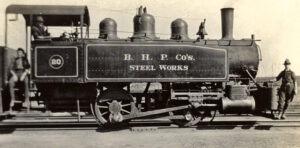
If you work in Australian railway engineering, maintenance, or procurement, the designations 47kg and 53kg are immediately familiar — not just as dimensions, but as historical markers. These two mid-weight rail profiles, trace a lineage that runs from the imperial steelworks era, through the metrication of the 1970s and 80s, right up to modern network approvals.
