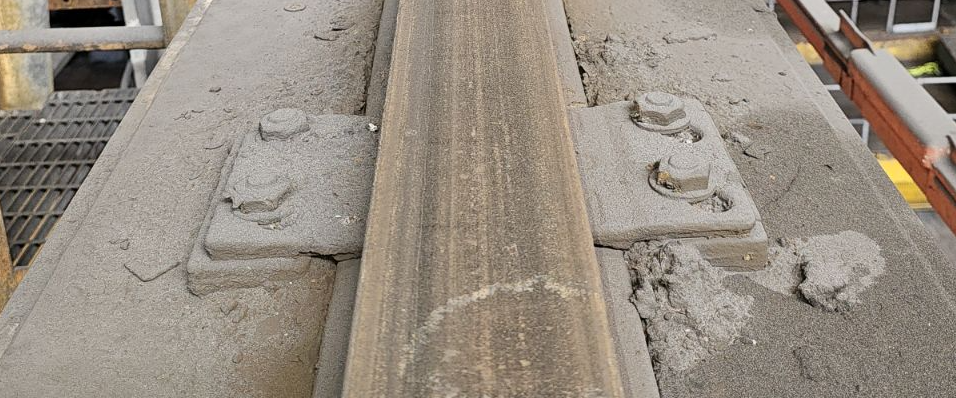
Inform Rail is able to source all types of rail clips available on the market.
Today, most manufacturing occurs in China and Malaysia and these rail clips, and other brands on the market, are engineered to:
- Secure crane rails to their support structure
- Allow controlled lateral movement caused by thermal expansion, wheel forces or operational loads
- Reduce wear and extend the life of the overall rail system
While Grantrex, Gantrail, Molyneux and Bemo are commonly known, numerous other manufacturers produce clips with similar form, function and load performance.
Regardless of brand, the primary purpose remains the same:
Hold the rail securely while allowing movement and reducing stress on the rail and structure.
How to Verify the Clips You Have
At Inform Rail, we specialise in identifying legacy and hard‑to‑find clip types. Feel free to send us photos of your existing clips – we’re happy to help!
Most crane rail clips, no matter the manufacturer, include identifying marks, often stamped or cast, such as:
- The manufacturer’s name or logo
- A model or series number
These markings are usually found on the cam or body of the clip.
For accurate comparison or replacement, product data sheets remain the most reliable source for:
- Load capacity
- Material specifications
- Installation requirements
- Performance characteristics
We have an extensive archive of historical product data sheets, enabling us to assist with identifying older or discontinued clip types.
Replacing Existing Clips: Should You Use the Same Ones?
Not always.
While replacing your clips with identical models might feel like the simplest choice, it may not be the best or most compliant one.
Your current installation may:
- No longer meet modern design standards
- Have been originally built with non-optimised components
- Use clips that are now obsolete or outperformed by newer designs
Before replacing any clips, it’s important to review:
- Original design intent – does it still apply to current operations?
- Changes in operational load or crane frequency
- Rail alignment issues or new wear patterns
- Why the existing clips failed or wore out
Updated product alternatives may offer better:
- Load performance
- Adjustment capability
- Installation efficiency
- Long-term durability
Giving Inform Rail a call, engaging an engineer or reviewing the original design documentation helps to ensure replacement clips are fit for purpose and align with current standards and site conditions.