
Rail Drill: Saved the day for Inform Rail
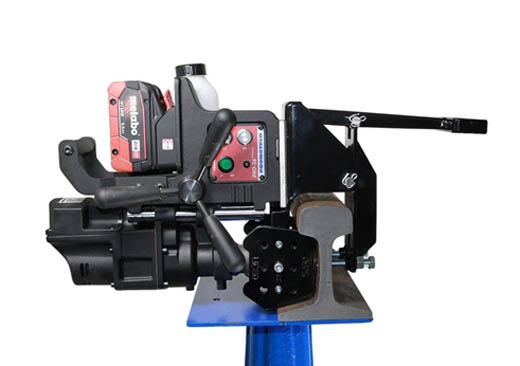
Just before shipping a rail product, Inform Rail received a last-minute request from a customer: could the rail be drilled before dispatch? Normally, cutting and drilling are handled by trusted partners, but this time there was no time to waste. That’s when the portable rail drill stepped up. The team grabbed the PRO NM-360 Cordless Rail Drilling Machine, and it delivered exactly what was needed – clean, accurate holes in hardened rail, right on schedule.

What Is a Rail Drill?
Drilling into rail steel isn’t your average job. It’s tough, precise work that demands the right tool for the task. Whether you’re bonding cables, installing fishplates, or setting up signal infrastructure, a purpose-built rail drill can make all the difference.
Rail drills are designed specifically to handle the hardness and density of steel rail profiles. They deliver clean, accurate holes without compromising the integrity of the rail, which is critical for safety and long-term performance.
The PRO NM-360 Cordless Rail Drilling Machine
Inform Rail stocks the PRO NM-360, a cordless rail drill powered by 18v Battery with rpm of 260 and light weight at 13.4Kg. This drilling machine stands out for its mobility, ease of use, reliability. Built for field work, this drill is ideal for teams who need to move quickly and work cleanly across a range of rail profiles.
What sets the PRO NM-360 apart is its cordless design. It gives operators full flexibility without the need for generators or cables, making it perfect for remote sites or tight access areas. The magnetic base ensures secure positioning, while the lightweight build makes it easy to handle across long shifts.
This drill is well-suited for:
- Bonding applications
- Signal installation
- Maintenance work
- Fast, repeatable drilling in tough rail steel
It’s a practical solution for crews who value speed, precision, and portability.
Why It Matters
Rail drilling is a niche task, and not every drill is up to the job. The PRO NM-360 distinguishes itself by combining field-ready design with serious performance. It’s built for the realities of rail work where time matters, access is limited, and reliability is non-negotiable.
If you’re looking for a drill that’s ready to go when you are, Inform Rail has you covered.
Inform Rail
At Inform Rail, we’re proud to lead the way in crane rail and standard rail supply across Australia. Whether you’re a graduate engineer finding your feet or a managing director overseeing major infrastructure, we’re always up for a chat and ready to take on any challenge. We bring deep technical know-how and the kind of old-school service that still matters. If you’ve got a project in mind or just want to explore what’s possible, we’re here and keen to help.
More Posts

We Built a Free Crane Rail Design Tool. A Worldwide First.
Clip selection, rail profile, lateral loads, clip spacing, fishplates, sole plates, accessories it all stacks up fast. And unless you have someone experienced on the end of the phone, or you happen to have the right manufacturer datasheets in front of you, the process can take longer than it needs to.
That bothered us. So we did something about it.
The ARBED Story Behind Crane Rail (including CR73 Rail)
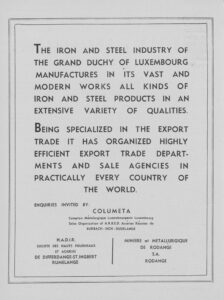
ARBED turns up on legacy drawings, in supplier literature and in the technical specifications behind some of the most widely used crane rail profiles in heavy industry. The company itself no longer exists as a standalone entity, but the catalogue it built lives on inside ArcelorMittal, and the story of how it came to be is one of the more remarkable chapters in twentieth century European industrial history.

The Research That Put Australia on the Heavy Haul Map: 73kg and 86kg Crane Rail
If you’ve come across the 73kg or 86kg crane rail in an Australian port or industrial context, you’re looking at profiles that arrived here on the back of one of the most significant chapters in Australian rail engineering history.
47kg and 53kg Rail in Australia: From Imperial Roots to Modern Networks
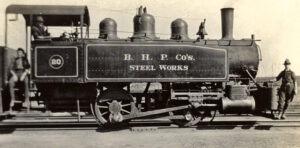
If you work in Australian railway engineering, maintenance, or procurement, the designations 47kg and 53kg are immediately familiar — not just as dimensions, but as historical markers. These two mid-weight rail profiles, trace a lineage that runs from the imperial steelworks era, through the metrication of the 1970s and 80s, right up to modern network approvals.