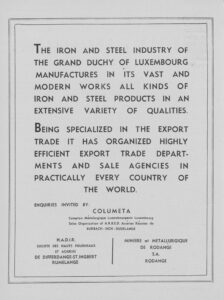
Two interesting connections are worth noting. The 73kg crane rail shares key dimensions with the AS 53kg rail, with the main difference being a significantly thicker web, 32mm versus 14.6mm. And the 86kg profile may have evolved from the 89kg crane rail commonly used in the United Kingdom. But the story of why these profiles were developed in Australia, and why BHP needed them, runs straight back to a research programme that most people in the industry have never heard of.
Where Everything Changed
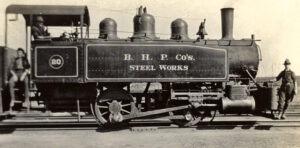
By the late 1960s, BHP was building something extraordinary in the Pilbara region of Western Australia. The Mount Newman railway ran 426 kilometres from Newman to Port Hedland. The Goldsworthy railway had opened in 1966. These lines were carrying iron ore at a scale Australia had never attempted, with axle loads and train weights that pushed well beyond anything the existing engineering playbook was designed for.
To put the eventual scale in perspective: by 2001, BHP Iron Ore was running trains weighing 99,734 tonnes, stretching 7.3 kilometres, hauling 82,000 tonnes of iron ore in a single consist of 682 wagons. A Guinness World Record for the heaviest and longest train ever operated. That kind of performance doesn’t happen without serious engineering behind it, on the track and at the ports receiving the ore.
The Melbourne Research Laboratories
Here’s the part that surprises most people.
A significant chunk of the research that made the Pilbara railways what they became was conducted not in Perth or Newman, but in Melbourne.
From around 1960, BHP operated its Melbourne Research Laboratories, a dedicated industrial research facility that by the 1970s and 1980s had turned its focus squarely on the performance of the Pilbara rail networks. Working alongside researchers from the University of Western Australia, the Melbourne lab tackled the real-world challenges of track behaviour, rail wear, train dynamics, and operational efficiency on lines like Mount Newman and Hamersley Iron.
What made the programme exceptional was how integrated it was. Field investigations ran alongside laboratory studies. Track maintenance crews worked directly with research staff. The people actually maintaining track in the Pilbara heat were in the room with the scientists in Melbourne. Findings were immediately applicable, not just academically interesting.
The UWA group later spun out into a separate entity, continuing work on heavy haul train dynamics that fed into industry practice for years afterward.
What came out of this Melbourne-led research was significant enough that in 1975-76 it directly inspired the formation of the International Heavy Haul Association (IHHA), now the global peak body for heavy haul railways, with 15 international conferences across 8 countries to its name. Australia didn’t just participate in the global heavy haul conversation. It started it.
Where the 73kg and 86kg Come In
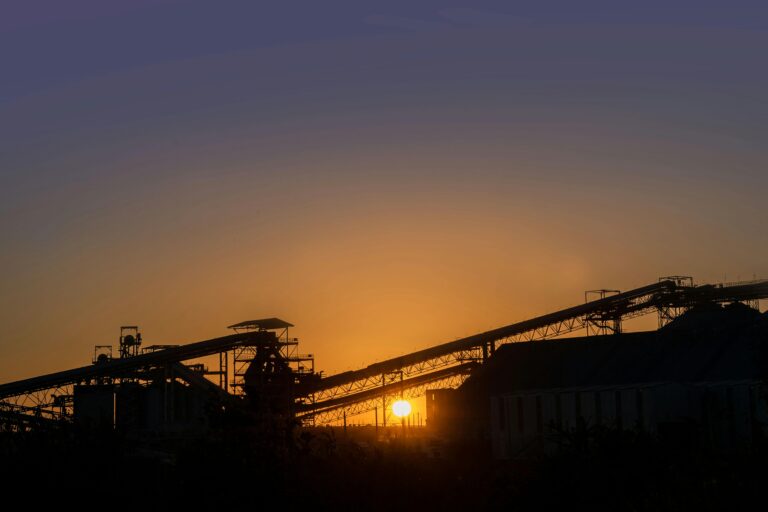
At the port end of those Pilbara railways, and across BHP’s steelworks infrastructure at Newcastle and Port Kembla, the equipment handling the ore needed crane rail capable of carrying enormous loads. Stacker-reclaimers, ship loaders, overhead cranes in steelworks bays, bulk handling equipment on wharves.
The 86kg profile has a cross-sectional area of 11,004 mm² and a calculated mass of 85.5 kg/m. Both profiles are still supplied into Australia today for:
- Steelworks overhead cranes, ladle cranes, transfer cranes, and coil handling
- Port and wharf cranes, ship-to-shore and bulk handling equipment
- Heavy mining infrastructure, wherever equipment runs on fixed crane rail
The Bigger Picture
The 73kg and 86kg crane rail profiles are, in one sense, a footnote to a much larger story. The real chapter is the research that BHP’s Melbourne Laboratories and the University of Western Australia conducted through the 1970s and 1980s, work that reshaped how the world thinks about heavy haul rail engineering and gave rise to the IHHA.
The crane rail profiles that ended up at Port Hedland and in BHP’s steelworks bays are the physical infrastructure that sits at the end of that story. Knowing where they came from, and why they were needed, is part of understanding the full picture of how Australian heavy industry was built.
Tags: Arcelor 73kg crane rail, Arcelor 86kg crane rail, ARBED crane rail Australia, crane rail Australia, heavy haul rail Western Australia, Pilbara railway, Mount Newman railway, Port Hedland rail, BHP Melbourne Research Laboratories, IHHA history Australia, heavy crane rail, ArcelorMittal crane rail, Australian port crane rail