
Concrete Sleepers
Inform Rail supplies precast prestressed concrete sleepers for crane tracks and rail track across Australia, rated to 450 kN wheel loads for container cranes, stacker reclaimers and heavy port equipment, supplied complete with rail, clips and pads.
Precast Concrete Sleepers for Heavy Crane Track
Concrete crane track sleepers carry crane rail in a ballasted track system. The rail sits on an elastic pad, is held to the sleeper by spring clips, and the sleepers are bedded in compacted ballast on prepared ground such as gravel or sand-cement stabilisation. The finished track can be surfaced over with asphalt, concrete panels or paving where the yard requires a trafficable surface.
The system was developed for rail mounted gantry and automated stacking cranes at container terminals, where long yard runways often sit on reclaimed or settlement-prone ground. On that ground a rigid founded concrete beam is difficult to correct once it moves, while sleeper track is re-tamped back to line and level as part of routine maintenance. It suits the same conditions at bulk facilities, intermodal terminals and industrial yards.
Inform Rail supplies the sleepers as part of a complete track package: crane rail or standard rail to suit the machine, sleepers, spring clips, elastic pads and jointing components, matched from the start so the rail seat, clip and pad work as one system. Concrete railway sleepers for 1435mm gauge track are also available. Packages are supplied to projects Australia-wide.
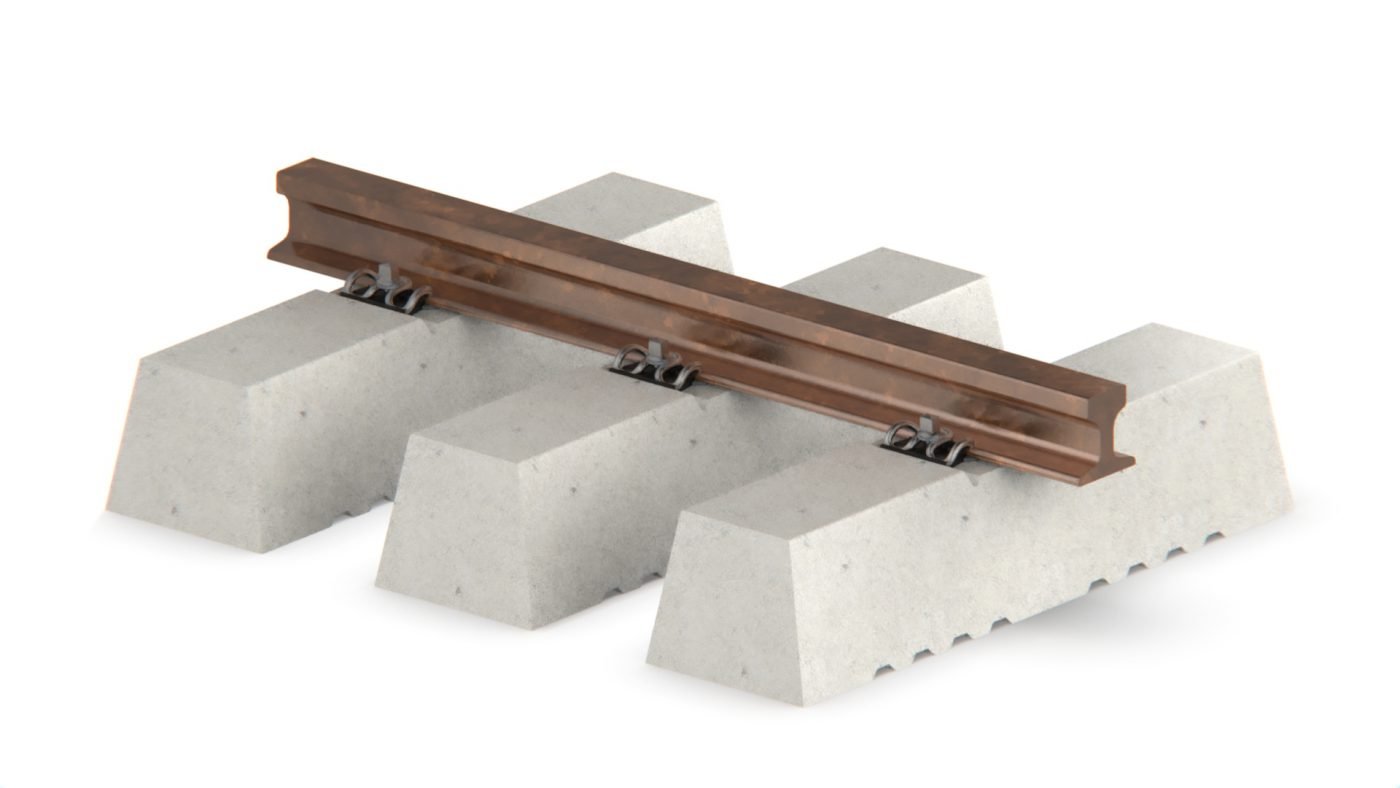
Concrete Sleepers at a Glance
Why Ports and Terminals Choose Concrete Sleeper Track
On the right ground, sleeper track outperforms a founded concrete beam on cost, adjustability and construction time.
Built for Heavy Wheel Loads
Prestressed concrete gives the mass and stiffness that heavy crane wheel loads demand, with a 450 kN standard rating covering RMG and ASC container cranes from the major crane manufacturers.
Handles Settling Ground
On reclaimed land and soft subgrades, sleeper track is lifted, packed and tamped back to tolerance as the ground moves. A rigid founded beam offers no such correction without major works.
Lower Construction Cost
A ballasted sleeper runway generally costs less to build than a piled or founded concrete beam of equivalent capacity, and installs faster with precast units arriving ready to lay.
40 Year Design Life
Precast prestressed sleepers have a minimum design life of around 40 years with low maintenance, roughly double the service life of hardwood alternatives.
Consistent Geometry
Factory precasting holds tight dimensional tolerances, so the rail seat, cant and fastening positions are consistent along the full runway.
Removable and Relocatable
Because the track is discrete precast units in ballast, it can be lifted, relocated or reused when the yard layout changes, which a cast-in-place beam cannot.
Crane Track Sleepers and Railway Sleepers
Two sleeper types for two jobs: heavy crane runways in yards and terminals, and conventional rail track.
Confirm the machine's maximum wheel load, wheel spacing and rail profile in your enquiry so the sleeper design and spacing can be matched to the duty.
How a Ballasted Sleeper Track Goes Together
The sleepers are set out on a compacted ballast bed over prepared ground. The ballast provides a stable bearing, damps vibration from passing wheel loads and drains stormwater away from the track. The rail is then set to line and level, fixed to each sleeper through its elastic pad and spring clips, and the ballast is compacted under each sleeper to lock the geometry in.
Good subgrade preparation is the single most important factor in how the track performs: the ground beneath the ballast must be well compacted before the track goes down. From there, maintenance is straightforward. If settlement occurs, the track is lifted and re-tamped back to tolerance rather than rebuilt.
Enquire About Sleeper Track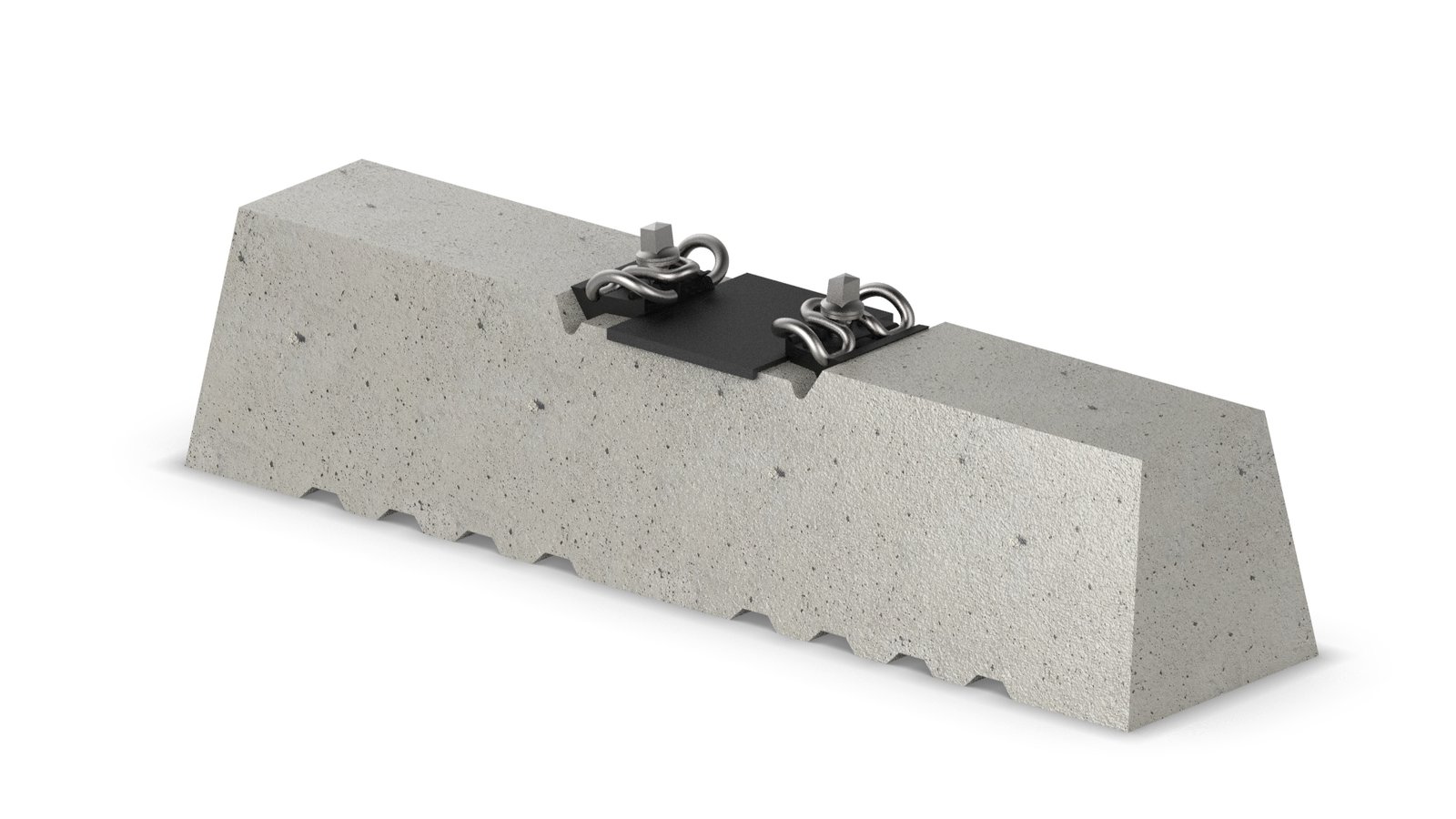
What to Send Us
Other Sleeper Types
Concrete suits most heavy duty crane track, but it is not the only option. We can advise on alternatives where the duty or the project calls for them.
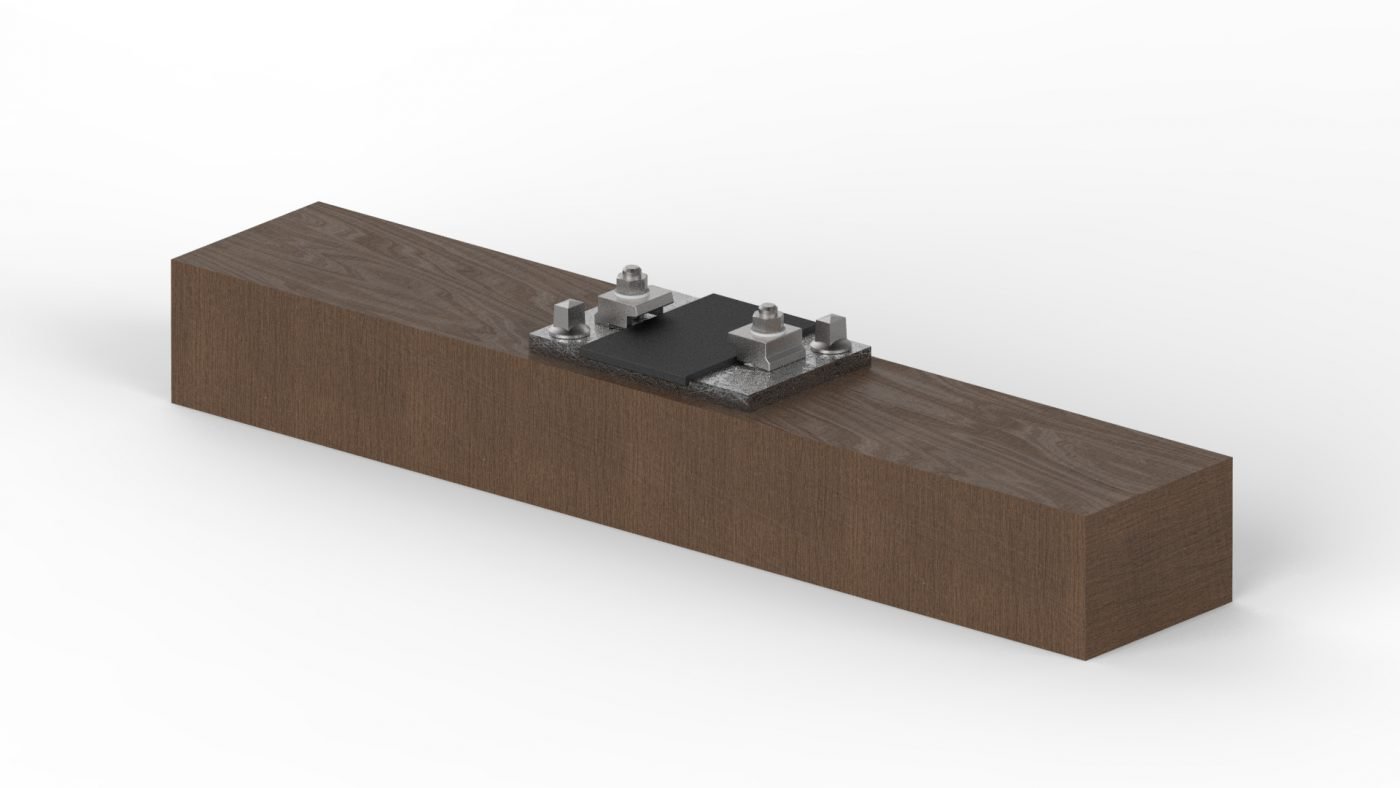
Hardwood Sleepers
Hardwood crane track sleepers suit wheel loads up to 450 kN with a service life of around 20 years. A lower-cost option for shorter-life installations and lighter duties, easy to adjust after settlement.
Hardwood sleeper specifications (PDF)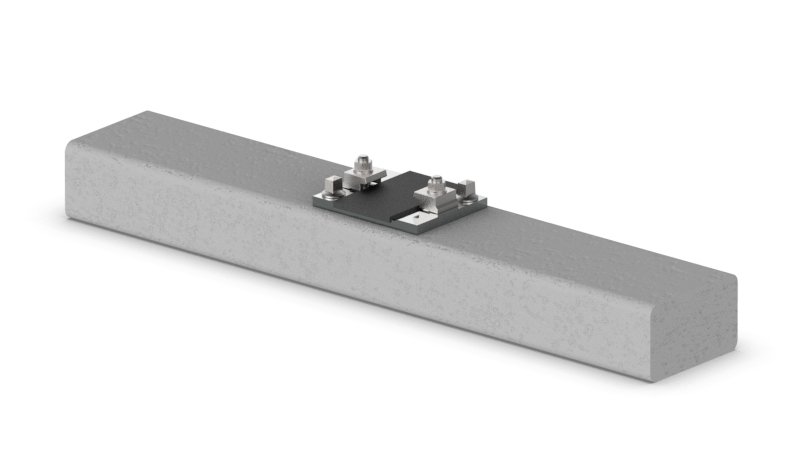
Synthetic Sleepers
Recycled plastic sleepers with an expected service life of around 50 years. Lightweight, quick to install, resistant to deformation under load and fully recyclable at end of life.
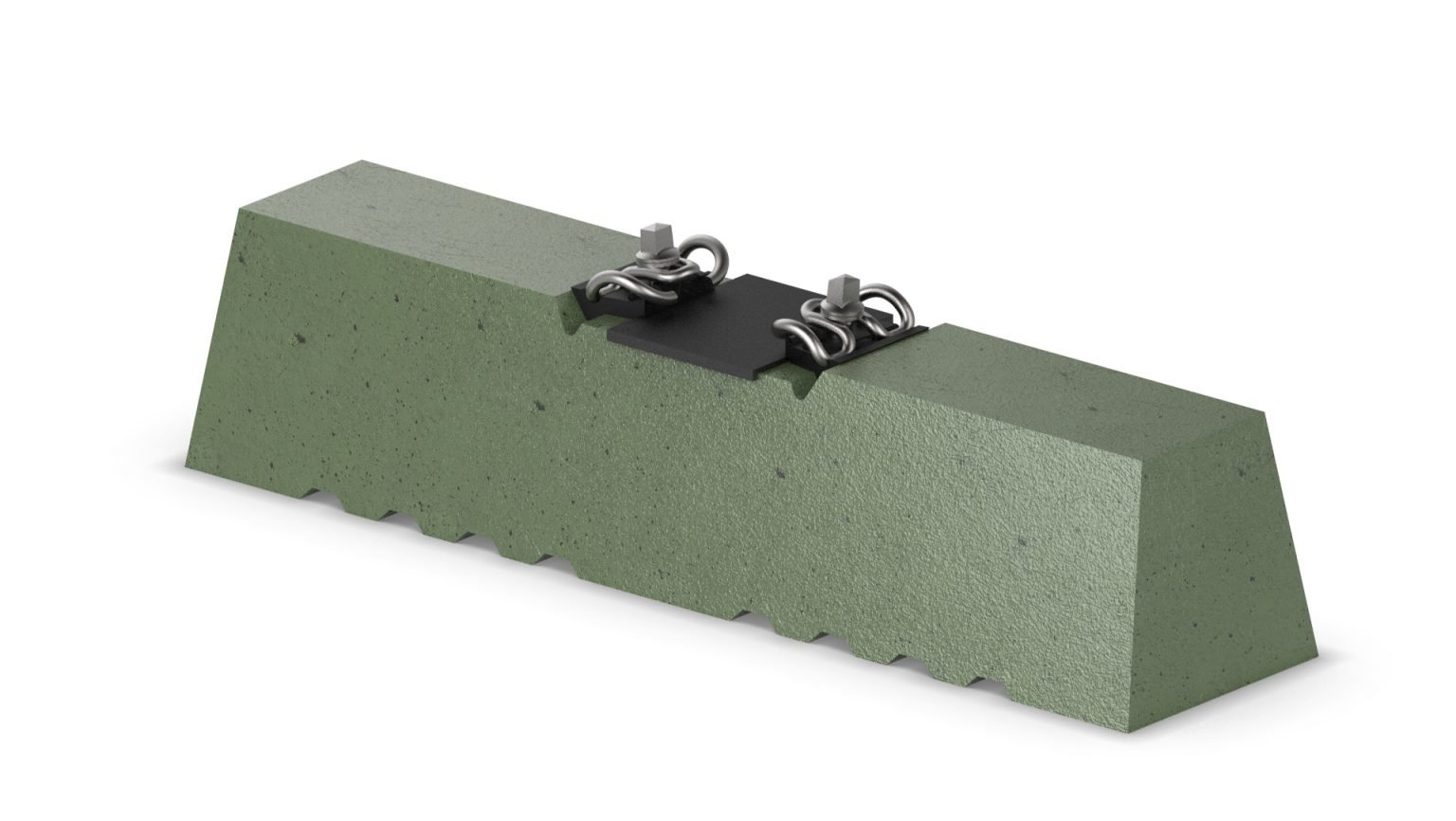
Sulphur Concrete Sleepers
A circular alternative to conventional concrete in which sulphur replaces cement and water, with low embodied emissions and comparable performance. Available for projects with sustainability targets.
Sulphur concrete brochure (PDF)Concrete Sleepers: Common Questions
What are concrete crane track sleepers?
What wheel loads can concrete crane track sleepers carry?
When are concrete sleepers used instead of a concrete beam foundation?
How long do concrete sleepers last?
Can a sleeper track be adjusted or relocated after installation?
Do you supply the rail and fastenings with the sleepers?
Need Concrete Sleepers for a Crane Track?
Send us the machine details, wheel loads and track length and we'll come back with a practical supply option.